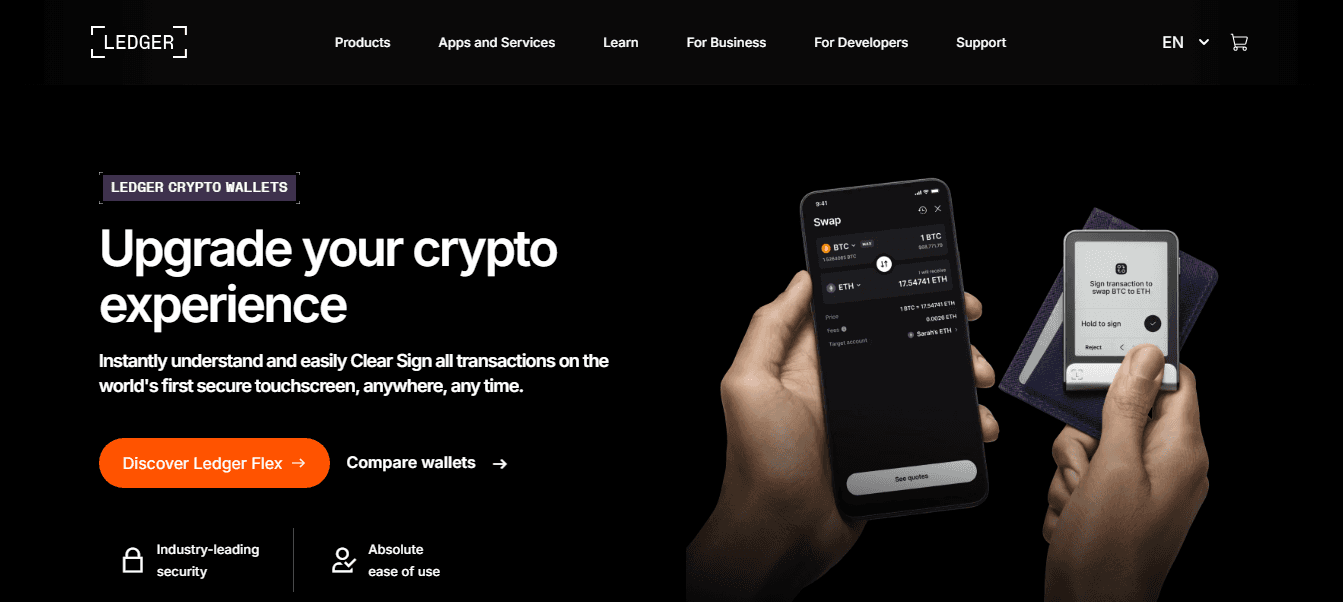
Ledger Login: A Secure Gateway to Your Digital Asset Management
In the world of digital finance, security and user trust are paramount. As cryptocurrency adoption grows, so does the need for secure access methods that protect users from unauthorized entry, phishing attacks, and fraudulent platforms. “Ledger Login” represents the broader concept of safely accessing your Ledger ecosystem—primarily Ledger hardware wallets and the Ledger Live application—through a secure, verified, and user-controlled authentication flow. Although Ledger Login is not a standalone product, it is the essential process by which users ensure that only they can access their accounts, manage their assets, and approve transactions within the Ledger environment.
The foundation of Ledger Login begins with the principle that your private keys never leave your Ledger hardware wallet. This means that login, authentication, and transaction confirmations are rooted in a device that operates offline and cannot be accessed remotely. Unlike online wallets or traditional login systems that rely on passwords stored on servers, Ledger uses a completely different security model: your credentials are entirely under your control. This model is designed to eliminate the attack vectors commonly associated with online services—data breaches, password leaks, or server-side attacks.
When users initiate Ledger Login, the first step typically involves connecting their Ledger hardware device (such as the Ledger Nano S Plus or Ledger Nano X) to their computer or mobile device. This initial connection establishes a secure communication channel between the hardware wallet and the Ledger Live software. Unlike many cryptocurrency platforms that rely on email-based authentication or web-based login portals, Ledger Login uses physical verification, ensuring that the authentication process cannot be replicated by malicious websites or software. Because the private keys on the device cannot be extracted or duplicated, hackers have no pathway to impersonate the user.
Once connected, the user is prompted to enter their PIN code on the Ledger device. This PIN is known only to the user and is never shared or transmitted over the internet. Entering the PIN unlocks the device and enables it to perform signing operations. If the wrong PIN is entered repeatedly, the device wipes itself as a security measure, preventing brute-force attempts. This is a critical component of Ledger Login, as it ensures that even if someone physically steals the device, they still cannot access its contents.
After the device is unlocked, Ledger Live can recognize it and grant the user access to their portfolio, accounts, transaction history, staking services, and other features. At this stage, Ledger Login has effectively authenticated the user, but the system remains secure because no sensitive information has been revealed. Users can view account balances and portfolio data freely, but any action that requires signing—such as sending crypto, interacting with decentralized apps, or staking—still requires explicit confirmation on the device. This combination of viewing freedom and signing restrictions is designed to balance usability with layered security.
Another crucial aspect of Ledger Login is phishing protection. Many crypto users fall victim to fraudulent websites pretending to be wallet interfaces or exchange platforms. Ledger significantly reduces this risk by eliminating browser-based logins altogether. Ledger Live is a standalone app, and Ledger hardware devices require physical confirmation before any operation can proceed. As long as users avoid entering their recovery phrase online—a rule that Ledger emphasizes heavily—they remain protected from the majority of common scams.
Beyond the standard login process, users also benefit from additional security layers, such as passphrase protection, which adds a hidden account accessible only with a second custom password. Some advanced users utilize separate passphrase-set accounts for higher-value or long-term holdings, ensuring that even if someone gains temporary access to the device, they still cannot reach these hidden assets without the secondary passphrase.
Ledger Login also plays an important role in Web3 interactions. When connecting to decentralized applications, the Ledger browser extension or Ledger Live communicates with the hardware wallet to authenticate the user. This ensures that signing approvals—for NFT transactions, smart contract interactions, or token swaps—are verified physically through the device. Unlike software wallets, where private keys are stored on the computer or browser, Ledger Login prevents any signing event from occurring without hardware-level approval. This drastically reduces the risk of unauthorized smart contract interactions or malicious contract draining.
As Ledger continues to expand its ecosystem, the importance of secure login architecture becomes even more central. With new features such as integrated staking, token swaps, NFT visualization, and third-party services available through Ledger Live’s Discover section, the login system ensures that all of these operations remain protected within a secure hardware environment. Every authentication request passes through the same root security model: physical verification, local signing, and strict resistance to external access.
Ultimately, Ledger Login represents more than a simple authentication step—it reflects Ledger’s entire philosophy of user sovereignty, private key ownership, and uncompromising security. It demonstrates that cryptocurrency access should not rely on passwords, cloud accounts, or centralized services but instead on a secure device controlled entirely by the user. Whether you are a newcomer managing your first digital asset or an experienced investor operating across multiple blockchains, Ledger Login provides the assurance that your financial autonomy and security remain intact.